Table of Contents
- Understanding Car Frame Rust and Why Prevention Matters
- Step 1: Surface Preparation and Cleaning
- Step 2: Removing Loose Rust and Scale from Your Vehicle
- Step 3: Degreasing the Undercarriage
- How to Remove Rust from Car Undercarriage: Advanced Techniques
- Best Undercoating for Truck Frames and Long-Term Protection
- Automotive Corrosion Protection for Beginners: Preventative Maintenance
- Common Mistakes to Avoid When Stopping Frame Rust
- Frequently Asked Questions
Last Updated: September 27, 2026
Understanding Car Frame Rust and Why Prevention Matters
To stop car frame rust before it eats away at the structural integrity of your vehicle, you must understand how it weakens the steel skeleton that protects you in a collision. Unlike surface rust on a bumper or hood, frame rust is a serious threat to longevity and safety. At Corrosion Pro Plus, we’ve spent over 15 years helping vehicle owners understand that how to stop car frame rust isn’t about appearance, it’s about keeping your investment safe and drivable for years to come.
Frame rust starts in hidden crevices where salt, moisture, and road chemicals seep into the undercarriage. Once corrosion begins, it spreads quickly. Prevention is always cheaper and easier than repair.
Step 1: Surface Preparation and Cleaning
Surface preparation is the foundation of rust prevention. A dirty, grimy undercarriage won’t bond properly with protective coatings, and hidden rust will continue spreading underneath.
Wash the entire undercarriage with a pressure washer on moderate pressure, focusing on frame rails, suspension components, and visible rust spots. Let dry completely to remove loose dirt, road salt, and debris that trap moisture.
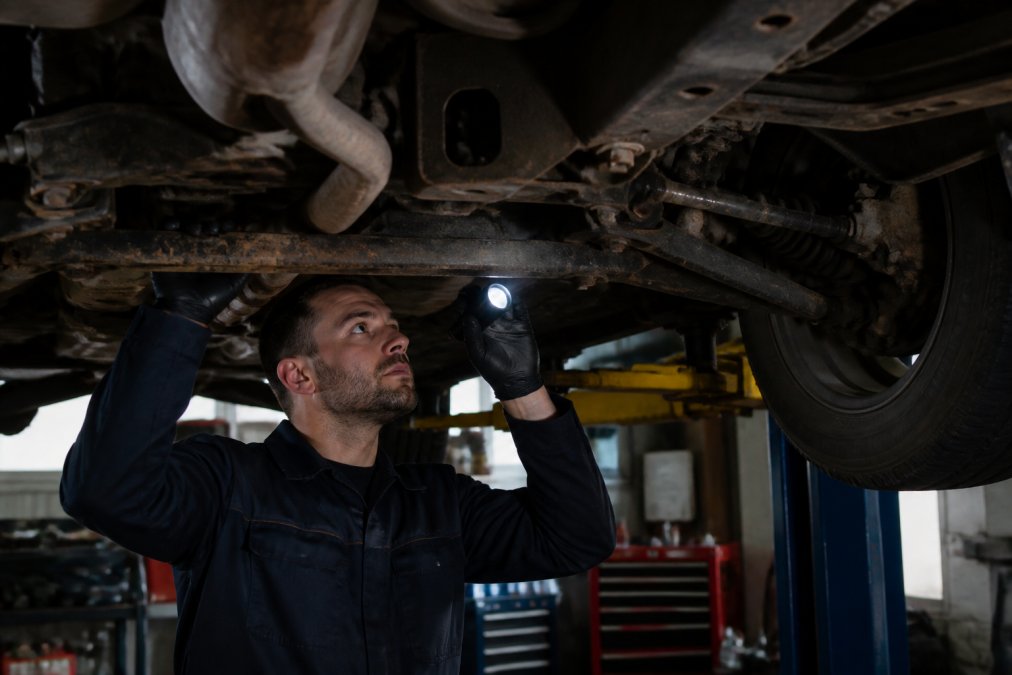
Inspect for flaking rust, white crusty deposits (salt corrosion), pitting, and bubbling paint. Mark problem areas and pay special attention to frame rails, they’re rust hotspots due to road spray exposure.
Step 2: Removing Loose Rust and Scale from Your Vehicle
Loose rust and scale must be removed before applying protective coatings. Rust converters won’t stick to flaky surfaces; they need bare metal or stable rust to bond.
Use a wire brush attachment on a drill for large areas, abrasive pads for curved surfaces, or a grinding wheel for severe rust. Remove all loose, flaking rust, stable rust firmly attached can remain. Stop when remaining rust is stable and firmly adhered.
Step 3: Degreasing the Undercarriage
Oil and grease trap moisture and prevent protective coatings from bonding. Thorough degreasing is essential before applying rust converters or sealants.
Spray degreaser on all frame surfaces and let sit (DWELL) per product instructions (usually 10-15 minutes). Scrub with a stiff brush, paying attention to joints, welded seams, and suspension points. Rinse thoroughly and allow 2-4 hours drying time before applying coatings.
How to Remove Rust from Car Undercarriage: Advanced Techniques
Before treating rust, determine whether it’s cosmetic or structural, a distinction that changes your entire strategy.
Assessing Structural Integrity vs. Cosmetic Rust
Cosmetic rust is surface-level oxidation that doesn’t compromise safety. Structural rust has eaten through metal or created soft spots that weaken the frame’s protective ability.
Use the hammer test: tap suspect areas with a ball-peen hammer. Solid metal rings clearly; rusted metal sounds dull and may crumble. Use the screwdriver probe: press gently into rust spots. Easy penetration and crumbling metal indicates structural damage; resistance indicates surface-level rust.
Pay special attention to frame rails, cross members, suspension mounting points, welded seams, and rocker panels, all rust hotspots.
Soft spots, holes, or crumbling metal indicate structural damage requiring professional assessment. If rust is stable and passes the hammer and screwdriver tests, proceed with rust conversion and protective coating.
Applying Rust Converters
Rust converters chemically transform iron oxide into iron tannate, a stable compound that won’t continue spreading. They work on rust remaining after wire brushing and abrasive cleaning.
Apply rust converter to clean, dry surfaces (2-4 hours after degreasing). Use a brush or spray, working it into all rust spots. Let cure per product instructions (usually 24-48 hours). The treated rust will darken and harden into a stable layer.
Rust converters are especially useful for pitted areas, moderate rust where grinding would weaken the frame, hard-to-reach spots, and cosmetic or surface-level rust confirmed by hammer and screwdriver tests.
The converter stops the rust from spreading and creates a foundation for protective coatings. Once cured and fully hardened, you can apply protective undercoating or penetrating oils over it.
Rust converters work best on firmly adhered rust. Remove loose, flaking rust first, converters applied over loose rust will trap it underneath and fail.
Using Rust Inhibiting Penetrating Oils
After rust converters cure, penetrating oils provide ongoing protection by displacing moisture and inhibiting oxidation. They seep into crevices and suspension components where moisture accumulates.
Apply penetrating oils by spraying directly onto the frame with steady passes, using a brush for tight spots and welded seams, and allowing excess to drip off naturally.
Penetrating oils are ideal for frame rails, suspension components, and areas where thick coatings would crack. Reapply annually or after winter exposure to maintain protection.
Best Undercoating for Truck Frames and Long-Term Protection
Undercoating is the heavy-duty barrier preventing moisture and salt from reaching your frame. Quality undercoating creates a durable, flexible barrier that adheres to metal and resists years of road exposure.
Look for undercoatings that adhere firmly, remain flexible, resist cracking, and resist salt spray. Professional-grade products like Waxoyl offer one-time application protection lasting years, many formulations provide protection for up to a decade when applied correctly.
Proper surface preparation, rust converters, degreasing, and abrasive cleaning, creates the ideal surface for undercoating to bond. A well-prepared frame with quality undercoating is your best defense against frame rust.
Automotive Corrosion Protection for Beginners: Preventative Maintenance
Maintenance keeps protection working and extends the life of your corrosion protection. Establish a routine tied to seasonal changes and environmental exposure.
Year-Round Inspection Schedule
Spring (Post-Winter Inspection) Wash the undercarriage thoroughly, focusing on frame rails and suspension. Inspect for new rust spots and coating damage from freeze-thaw cycles. Check suspension components for rust. Reapply penetrating oils to frame rails and suspension mounting points. Address coating damage immediately.
Environmental Factors That Accelerate Corrosion
Coastal areas: Increase inspection to monthly and wash every 2 weeks during winter. Heavy road salt areas: Wash weekly in winter, monthly in spring and fall. High-humidity climates: Ensure drain holes are clear; reapply penetrating oils every 6 months. Off-road use: Wash after each outing and inspect for coating damage.
Maintenance Checklist and Documentation
Keep detailed records of when you applied undercoating, rust converters, and penetrating oils. This helps you:
- Track when reapplication is due
- Identify patterns in rust development
- Provide documentation if you sell the vehicle (buyers value proof of corrosion maintenance)
- Make informed decisions about whether professional reapplication is needed
Maintenance log items to track:
- Date of undercarriage wash
- Date of penetrating oil reapplication
- Any new rust spots observed and their location
- Any coating damage or peeling
- Suspension component condition
- Environmental conditions (heavy salt use, coastal exposure, etc.)
- Any professional treatments applied
When to Seek Professional Reapplication
While annual penetrating oil reapplication is a DIY task, professional undercoating reapplication is worth considering every 3-5 years in harsh environments. Professional-grade undercoatings are thicker, more durable, and adhere better than consumer spray products. If you notice:
- Significant peeling or cracking in your existing undercoating
- Rust developing despite your maintenance efforts
- Coating damage in hard-to-reach areas
- Structural rust concerns (soft spots, holes, or metal that fails the hammer test)
Common Mistakes to Avoid When Stopping Frame Rust
Understanding what NOT to do is as important as knowing the right steps. Common mistakes waste time and money, and sometimes make rust worse.
Frequently Asked Questions
Can you stop rust once it has already started on a frame?
Yes, you can stop rust progression through surface preparation, rust conversion, and protective coatings. Once rust begins, prompt action is critical. Remove loose rust and scale, apply a rust converter to neutralize remaining oxidation, and seal the area with a protective coating or undercoating. The earlier you intervene, the better the outcome. Advanced rust that has compromised structural integrity may require professional assessment.
What is the difference between surface rust and structural frame rot?
Surface rust appears as discoloration or light flaking on the metal exterior and does not affect structural strength. Structural frame rot penetrates deeply into the chassis, weakening the frame’s integrity and compromising vehicle safety. Surface rust can be treated with abrasive cleaning and protective coatings. Structural rot requires professional evaluation and may necessitate frame replacement or reinforcement. Inspect your frame regularly to catch rust early.
How often should you apply undercoating to prevent frame rust?
High-performance undercoatings like Waxoyl are designed as one-time applications that provide multi-year protection without annual reapplication. This approach eliminates the need for recurring treatments and offers extended corrosion resistance. However, preventative maintenance—such as regular undercarriage washing, prompt removal of road salt, and inspection of coating integrity—should occur seasonally, especially in high-salt environments. Professional undercoating services can advise on the best maintenance schedule for your specific vehicle and climate.
Will WD-40 stop rust from spreading on a vehicle frame?
WD-40 is a penetrating oil that provides temporary moisture displacement and short-term corrosion inhibition, but it is not a permanent rust-stopping solution for frame rust. It will not prevent rust from spreading over time. For lasting protection, use dedicated rust converters to chemically neutralize existing rust, followed by protective sealants or professional undercoating. Rust inhibiting penetrating oils can supplement a comprehensive corrosion prevention strategy, but they should not be your only defense against frame rust.